Common Water Heater Problems: Causes, Fixes, and When to Repair or Replace
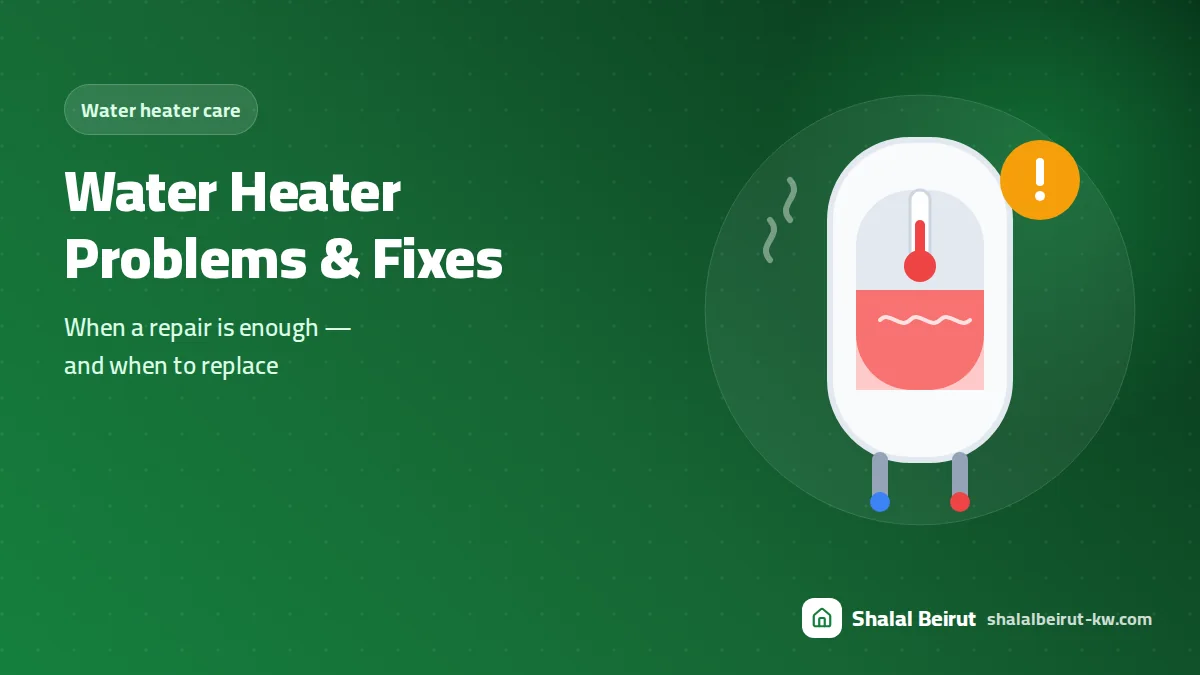
A water heater is one of those appliances we don't think about until it breaks — usually at the worst possible time. In Kuwait, electric water heaters run for long hours and the water contains minerals that settle inside the tank and on the heating element over time. That's why regular maintenance matters: it extends the heater's life and keeps your home safe. This article covers the most common faults, their causes, what you can do, and when you need a water heater technician.
How does an electric water heater work?
Knowing the main parts helps you understand a fault faster:
- The tank: stores the hot water and is lined inside to prevent rust.
- The heating element: a metal rod inside the water that heats up with electricity.
- The thermostat: controls the temperature and switches the element off when the water reaches the set temperature.
- The safety valve: releases water if the pressure or temperature goes above the safe limit.
- The anode rod (magnesium): corrodes instead of the tank body to protect it from rust.
The most common water heater faults and their causes
1. The heater doesn't heat at all
Possible causes: no power to the heater or the breaker has tripped, a failed heating element, or a faulty thermostat.
What to do: check that the heater's breaker is on. If it trips again after you reset it, don't keep trying — that means there's an electrical fault and you need a technician.
2. The water is warm, not hot
Possible causes: the thermostat is set too low, heavy scale is covering the element and reducing its efficiency, or the heater is too small for the household.
3. The hot water runs out quickly
This is usually caused by minerals and sediment collecting at the bottom of the tank, which reduces the actual amount of hot water. Cleaning the tank regularly solves this in many cases.
4. Popping or boiling sounds inside the heater
A popping sound is a clear sign of sediment at the bottom of the tank: water gets trapped under the sediment layer and boils. If you ignore it, the tank is put under strain and its life gets shorter.
5. Rusty or smelly water
Brown water can mean the anode rod is used up and the tank itself has started to rust. A rotten egg smell can come from a bacterial reaction with the anode; it's usually fixed by cleaning the tank and replacing the anode.
6. The heater is leaking
- A leak from joints and valves: usually minor and fixed by replacing a washer or tightening the joint.
- A leak from the safety valve: could mean excess pressure or temperature and needs checking straight away.
- A leak from the tank body itself: usually means the tank has corroded, and replacement is the safe solution.
Stay safe: never close off the safety valve to stop it dripping, and never open the heater's electrical cover yourself. Switch off the power to the heater and call a qualified technician.
Our recommended maintenance schedule
- Every 6 months: test the safety valve and check there are no leaks around the joints.
- Every year: drain and flush the tank to remove sediment, and check the element and thermostat.
- Every 2–3 years: check the anode rod and replace it if it's worn (possibly sooner if your water is high in minerals).
- Straight away if something changes suddenly: new noises, discoloured water, or the breaker tripping often.
When is replacing better than repairing?
Consider replacement if more than one of these applies:
- The heater is near the end of its typical lifespan (usually 8–12 years depending on the type and maintenance).
- There's rust or a leak from the tank body itself.
- Faults keep coming back, and the cost of repeated repairs is getting close to the cost of a new heater.
- The heater no longer meets your household's needs.
If you're replacing it, choose the right size for the number of people and bathrooms, and make sure the safety valve and earthing are installed correctly. Our plumbing team can help you choose the right size and location.
Tips to save electricity and extend the heater's life
- Set the thermostat to a moderate temperature that's enough for you, instead of the maximum.
- Use a timer so the heater only runs when you need hot water.
- Insulate long hot water pipes to reduce heat loss.
- Fit a water filter at the main inlet if you have heavy scale — it reduces the minerals reaching the heater.
Frequently asked questions
How often should a water heater be cleaned?
At least once a year, and more often if you hear popping sounds or notice the hot water running out quickly.
Is it normal for the safety valve to drip?
A small drip while heating can happen because water expands, but a constant or heavy leak isn't normal and needs checking straight away.
Can I replace just the element instead of the whole heater?
Yes — if the tank is sound with no rust or leaks, replacing the element or thermostat is an economical fix that works well.
Summary
Most water heater faults start with small signs: an odd noise, water that's not as hot, or a small drip. Regular maintenance protects the heater and your family. If you have any of these problems, the Shalal Beirut team services and installs water heaters in every area of Kuwait, 24/7. Book a technician now.
Need a plumber now?
65006904