Apartment Plumbing Problems in Salmiya: Ceiling Leaks, Weak Water Pressure and Shared Drains
Salmiya is one of the most built-up areas of Kuwait, full of apartment buildings. That gives plumbing problems here their own character: water has to reach high floors, drains are shared by dozens of flats, and a leak in one apartment can reach the one below. In this article we go through the most common problems we see in Salmiya apartments, how to find their source, and what to do as soon as you notice them.
Why are building plumbing problems different from houses?
In a standalone house everything is under your control: the tank, the pump and the pipes are all yours. In a building it's different:
- Shared water supply: most buildings have a ground tank and a pump that lifts water to a rooftop tank or pumps it straight to the flats.
- Shared drains: each flat drains into a vertical stack that collects waste from every floor.
- Shared responsibility: some faults are inside your flat; others are in the common lines, which are the landlord's or caretaker's responsibility.
1. A leak from the ceiling: where is it coming from?
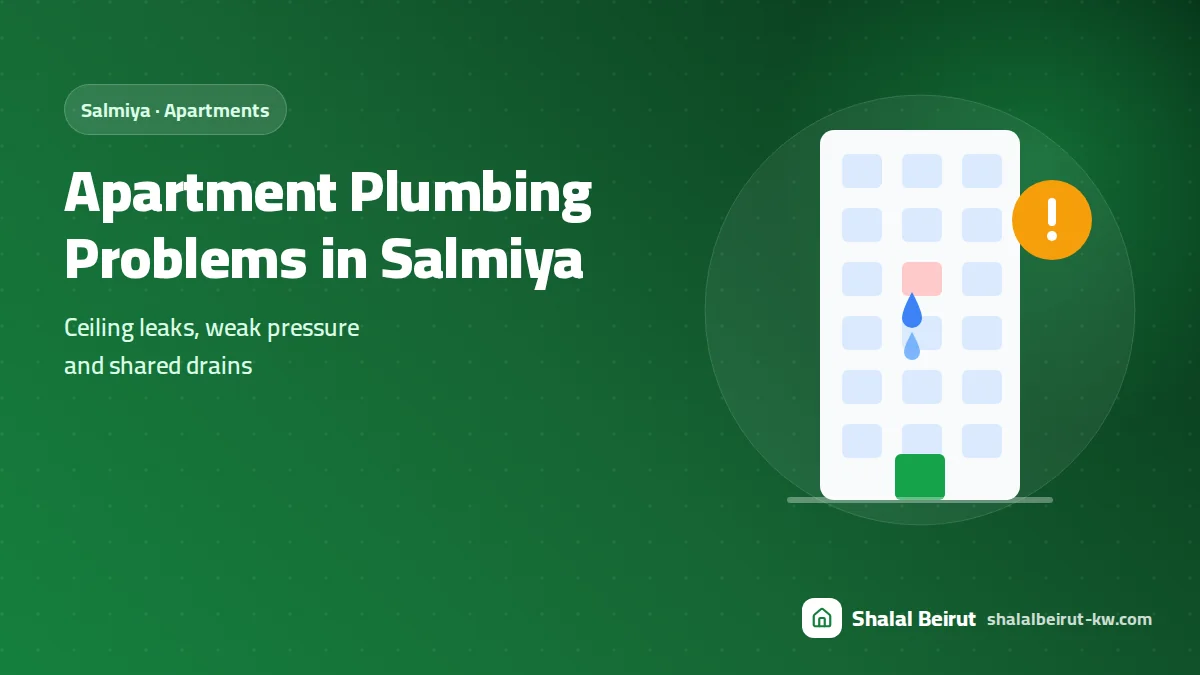
A damp patch on the bathroom or kitchen ceiling, blistered paint, or drips from a light fitting are some of the most common complaints in Salmiya apartments. The source is usually one of three things:
- The bathroom of the flat above: a leaking pipe, a leak under the bathtub, or failed floor waterproofing.
- The shared riser pipe: it runs through the wall and serves every floor.
- Air conditioning: condensation water can collect and look like a plumbing leak.
What to do: photograph the area and note when the dripping gets worse. If it increases when your neighbours use their bathroom, the source is probably above. Then inform the caretaker or landlord, and have a technician check with leak detection equipment to pinpoint the location without random breaking. See our plumbing services.
2. Weak water pressure on upper floors
If you live on the tenth floor, for example, and notice the shower is weak at peak times (mornings and late afternoon), the cause is usually not in your flat:
- The building's main pump is weak or its pressure switch needs adjusting.
- The rooftop tank doesn't refill fast enough during heavy use.
- Tap and shower aerators are blocked with scale — this one is inside your flat and easy to fix.
Start by cleaning your tap aerators yourself. If the weakness is at every tap and in every upper flat, the fix is at the building's pump and needs the landlord's attention. We also have a full guide to the causes of low water pressure.
3. Shared drains: when your neighbours block your drains
In buildings you might notice water coming up through your bathroom floor drain or kitchen sink even though you haven't used any water. This is a sign that the shared vertical stack is blocked below your floor, so waste from the upper floors backs up and comes out of the lowest outlet.
Careful: if sewage is coming up through your drain without you using water, don't try to clear it with chemicals. The problem is in the common line and needs professional drain cleaning from the inspection chamber.
4. A sewage smell in the bathroom
Smells in apartments are usually caused by:
- A dry floor drain: if a bathroom isn't used much, the water that seals the trap evaporates. Pour water into the drain every few days.
- A blocked vent on the stack, so air escapes through the floor drains instead.
- A worn toilet seal (wax ring) under the toilet.
5. The apartment water heater
Most Salmiya apartments have electric water heaters inside the bathroom or kitchen, often in tight spaces. Keep an eye on the safety valve: if it leaks constantly or the heater makes popping sounds, see our guide to water heater problems.
Who pays for the repair: you or the landlord?
It depends on your tenancy agreement, but in general:
- Inside the flat (taps, cisterns, water heater, pipes serving only your flat): usually the tenant, or as agreed.
- Common lines (the stack, inspection chambers, the pump and tank): usually the landlord.
That's why the technician's report matters: we tell you exactly where the fault is, and you can show it to the landlord.
Tips to avoid problems in your apartment
- Don't pour cooking fat down the sink, and use a drain strainer.
- Don't flush wet wipes, even if they say "biodegradable".
- Check under the sink every month: a little damp today can become a leak into the flat below tomorrow.
- If you're travelling for a long time, turn off your flat's main water valve.
Frequently asked questions
Can you find a leak without breaking the neighbours' bathroom?
Yes. In most cases we pinpoint the source with leak detection equipment, and if we need to open anything it's a small, specific spot.
Do you work in high-rise buildings and towers?
Yes, we work in buildings and apartments all over Salmiya, and we coordinate with the caretaker or landlord for common lines.
How long does it take you to get to Salmiya?
For emergencies we usually arrive quickly, depending on traffic and the time of the request. You can message us on WhatsApp and follow up with us.
Summary
Plumbing problems in Salmiya apartments need a technician who understands how buildings work: where your responsibility starts and ends, and how to find a leak without breaking. If you have a problem, the Shalal Beirut team is ready 24/7. Contact us now.
Need a plumber now?
65006904