Blocked Kitchen & Bathroom Drains: Causes, Fixes and When to Call a Professional
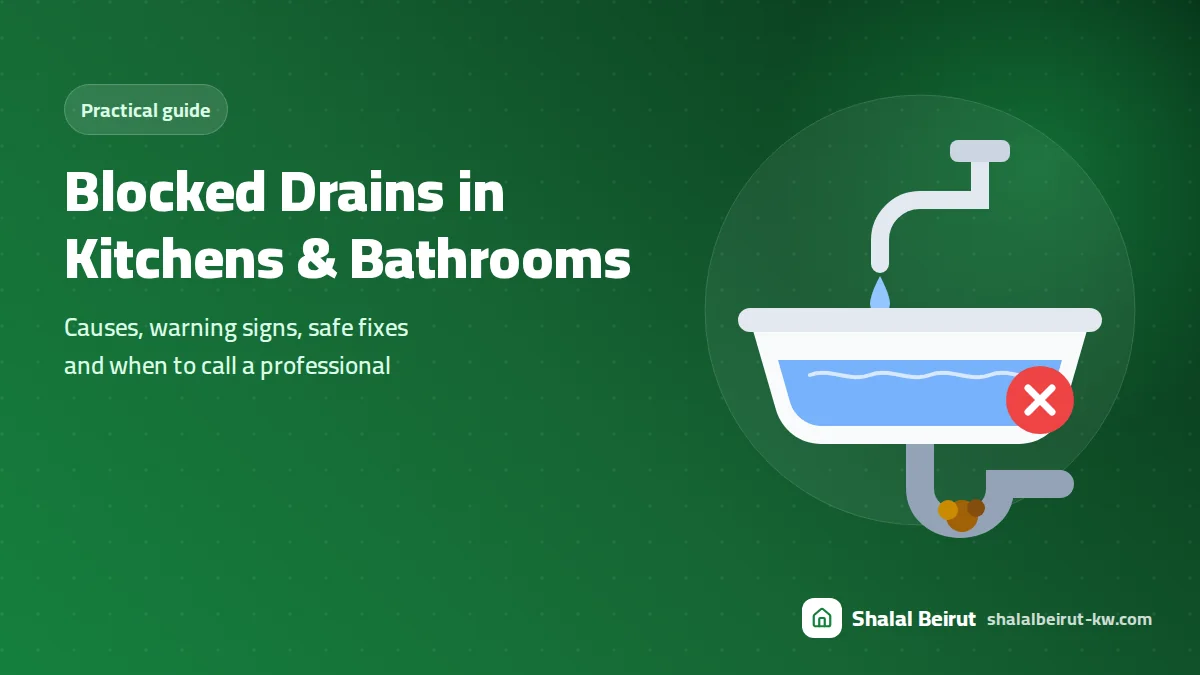
A blocked drain is one of the most frustrating problems at home: water standing in the kitchen sink, a bathtub that won't empty, or a bad smell coming from the floor drain. The good news is that most blockages have well-known causes, and many can be avoided before they get worse. This guide covers the causes, the early warning signs, safe fixes, and when it's better to call a professional drain cleaning technician.
Signs a blockage is on its way
A complete blockage rarely happens suddenly. There are usually clear warning signs first:
- Slow draining: water takes longer than usual to go down.
- Gurgling sounds: you hear bubbling from the drain or toilet after water drains.
- Bad smells: food waste and dirt decomposing inside the pipes.
- Water coming back up: water rises from the floor drain when the washing machine or bathtub drains.
- The toilet water level rises and then drops slowly after flushing.
The earlier you deal with a blockage, the easier and cheaper the fix — and the lower the risk of damaged pipes or a leak under the tiles.
The most common causes of kitchen drain blockages
1. Fats and oils
This is the number one cause of blocked kitchen sinks. Oil is liquid when it's hot, but it cools inside the pipe and sets on the walls. Over time it traps food waste and narrows the pipe until it closes completely.
2. Food waste
Bread, coffee grounds, vegetable peelings and small bones collect at bends and joints. Even with a food waste disposer under the sink, fibrous and starchy food can cause blockages.
3. Soap and scale
Soap residue reacts with the minerals in the water to form a sticky layer that clings to pipes — especially older ones.
The most common causes of bathroom drain blockages
- Hair: it tangles with soap and forms a dense mass in shower and basin drains.
- Wet wipes and items that don't break down: wet wipes, cotton and sanitary products don't dissolve like toilet paper and are one of the biggest causes of blocked toilets.
- Mineral scale: it builds up over the years and narrows the pipe.
- Sand and dust: in Kuwait, sand gets washed into floor drains when floors and outdoor bathrooms are cleaned.
Safe fixes you can try yourself
Before calling a technician, try these steps if the blockage is minor:
- Hot (not boiling) water with dish soap: helps dissolve light grease in the kitchen sink. Don't use boiling water with PVC pipes — it can damage the joints.
- A plunger: good for basins and toilets. Block the overflow hole with a cloth so the pressure is stronger.
- Clean the trap: the U-bend under most basins can be removed by hand. Put a bowl underneath, unscrew it, clean it, then refit and tighten it.
- Clean the shower drain cover: remove collected hair every week.
Careful: don't rely on strong chemical drain openers. They can corrode older pipes, they're dangerous for skin and eyes, and they don't clear deep blockages.
When do you need a drain cleaning technician?
Call a specialist if:
- The blockage keeps coming back shortly after cleaning.
- More than one drain in the house is blocked at the same time — this usually means the problem is in the main line, not a single sink.
- Sewage is coming back up through floor drains or the inspection chamber (manhole).
- A sewage smell won't go away even after cleaning.
- There's a leak or damp around the pipes or under the tiles.
How does a professional deal with a blockage?
A professional follows clear steps instead of trial and error:
- Inspection and diagnosis: finds out whether the blockage is in one spot or in the main line.
- Camera inspection (if needed): a camera inside the pipe shows exactly where the blockage is and what it is.
- Clearing with the right tool: an electric drain snake for tough blockages, or high-pressure water jetting to remove grease and scale from the pipe walls.
- Testing: runs the water to make sure it drains quickly and nothing is leaking.
- Prevention advice: explains what caused the blockage and how to stop it happening again.
Tips to stop your drains blocking again
- Collect oil and fat in a container and put it in the bin — don't pour it down the sink.
- Use a sink strainer and a hair catcher in the shower.
- Never flush wet wipes or cotton, even if the pack says "flushable".
- Pour hot water down the kitchen sink once a week.
- Have the main line serviced once a year, especially in older houses or busy households.
Frequently asked questions
Do bleach or acids unblock drains?
They may remove the smell for a while, but they don't properly dissolve hardened grease or tangled hair, and they can damage pipes and joints. Mechanical methods — or calling a technician — are the better option.
Why does the blockage come back a few days after clearing?
Usually because the clearing only opened a small channel and didn't remove the build-up on the pipe walls, or because the cause itself (like grease) is still there. Professional water jetting removes all the built-up layers.
Does drain cleaning require breaking tiles?
In most cases, no. Drains are cleared through cleaning points, floor drains and inspection chambers. Breaking is only needed if the pipe itself is broken or has sagged — and the camera inspection tells us that.
Summary
Blocked drains are common, but you can avoid most of them. Watch what goes down your drains, deal with the first signs quickly, and don't hesitate to call a technician if the blockage keeps coming back or affects more than one drain. The Shalal Beirut team clears drains in every area of Kuwait, 24/7. Get in touch and we'll be with you as soon as possible.
Need a plumber now?
65006904